

My mantra since I started teaching in 1999 was to make math an active subject. I wanted math standards to jump off the page. It was my goals to help students understand what a mathematized world we live in. I also realized that all students don’t learn the same way. In planning units of study, I make sure that students have a wide variety of math experiences that include concrete exploration, visual representations and then go to the abstract notations of any topic. (CRA model)
Utilizing manipulatives is a must in math education. Without further ado, here are number 1 – 5 of my top ten manipulatives for any classroom (in no particular order).
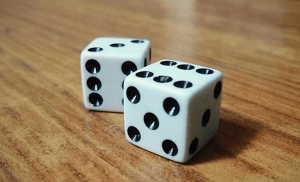
- Dice are the quintessential manipulative for any classroom no matter what grade level you teach. The numbers/pips can be added, subtracted, multiplied, compared, ordered, subitized, and counted. Word to the wise – the foam dice are your friends. You will thank me later.
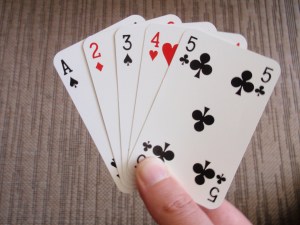
2. Playing Cards – Playing cards or Uno cards are easy to use in the classroom in that there are so many games/activities. These also come in handy for students to take out after they are finished work. I use cards to teach combining like terms (6th grade stuff).
OLYMPUS DIGITAL CAMERA
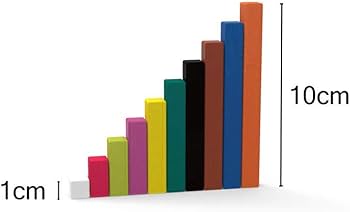
3. Cuisenaire Rods – Cuisenaire rods are magical. My students love them (despite being close to teenagers). If you are not familiar with them, they are colorful wooden rods that help students see mathematical relationships and provide tactile and visual models. What I love most about them is that they encourage all children to play as if they were in preschool again.
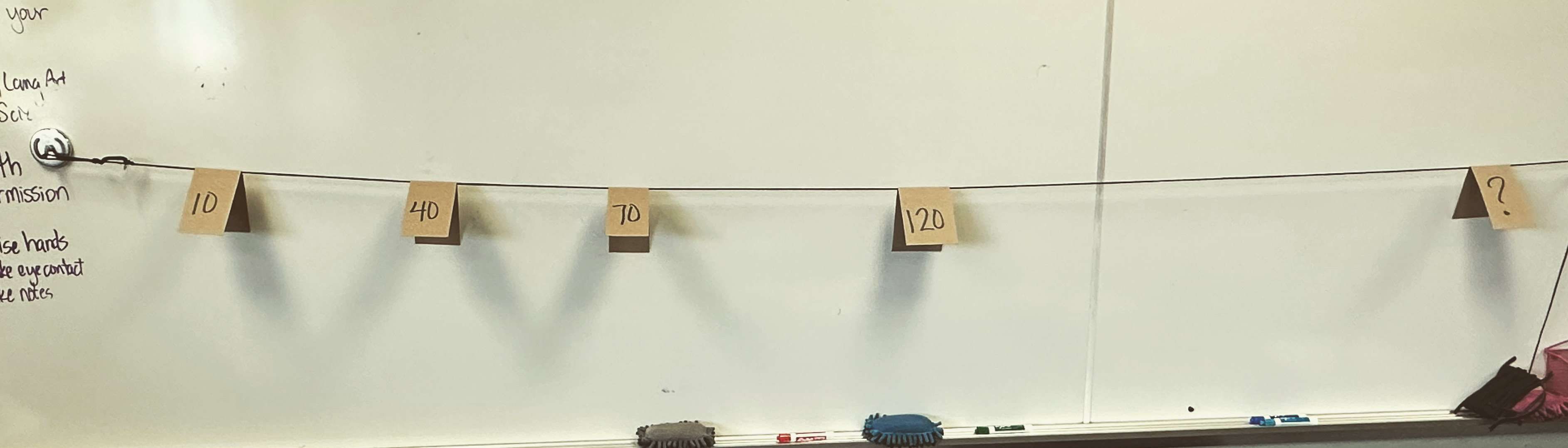
4. Clothesline Math stuff – You know I love me Clothesline Math. Besides the cards, a few other supplies are needed. For instance, paracord is the rope I use because it can withstand the weight of all the cards. Clothespins are also a must because students need to show the equity between numbers.
5. Tangrams- Tangrams are 7 shape pieces that form numerous pictures as well as other larger shapes. They are colorful shapes that help students utilize their proportional reasoning with fractions and geometry. Students view these as toys. Tangrams emphasize the need for the students to play, explore, and manipulate the shapes in order to find relationships among the pieces. One of my favorite projects that my students do is the Tangram Project. I introduce after state testing is over and my only direction to them is to play.

I’ ll review an additional 5 manipulatives/materials in another post.
Until next time,
Kristen